
Tag VPN: Features, Benefits, and How It Works
Virtual private networks (VPNs) have become essential tools for protecting online privacy, securing internet connections, and accessing content safely. Whether you’re working remotely, using public Wi-Fi, or simply looking to enhance your digital security, understanding tag vpn technology can help you make smarter decisions about your online experience.
As cyber threats continue to evolve, more individuals and businesses in the United States rely on VPN services to encrypt internet traffic and safeguard sensitive information. This comprehensive guide explains how tag vpn works, its key features, benefits, limitations, practical use cases, and best practices so you can use VPN technology confidently and effectively.
What Is Tag VPN?
Tag VPN refers to a VPN solution designed to provide users with a secure and encrypted connection between their device and the internet. Instead of sending your internet traffic directly to websites or online services, the VPN routes it through a secure server.
This process helps:
- Protect personal information
- Encrypt online traffic
- Hide your public IP address
- Improve privacy
- Secure public Wi-Fi connections
VPN technology has become increasingly important due to growing concerns about cybercrime, identity theft, online tracking, and data collection.
Who Uses VPNs?
Many different users benefit from VPN services, including:
- Remote employees
- Small businesses
- Students
- Travelers
- Gamers
- Journalists
- Privacy-conscious individuals
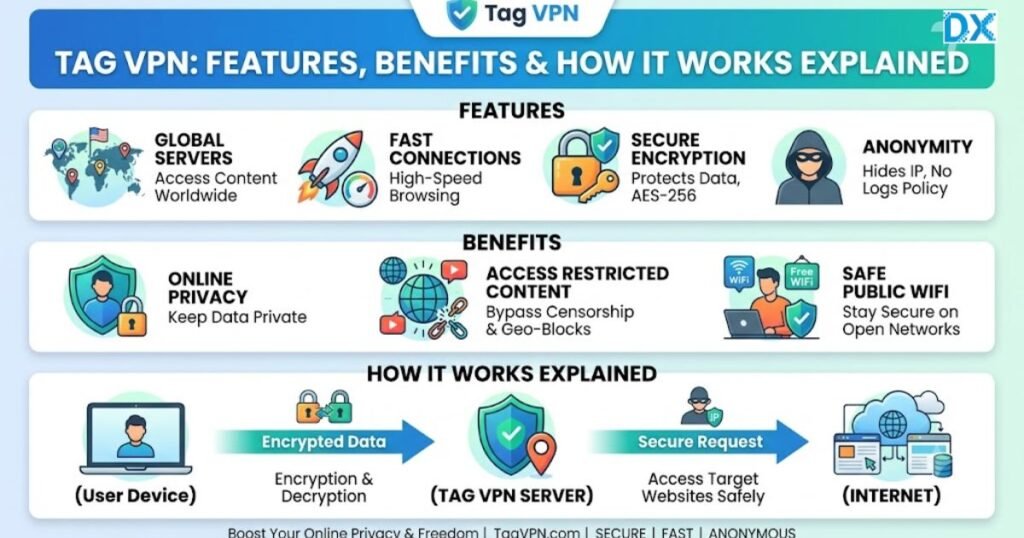
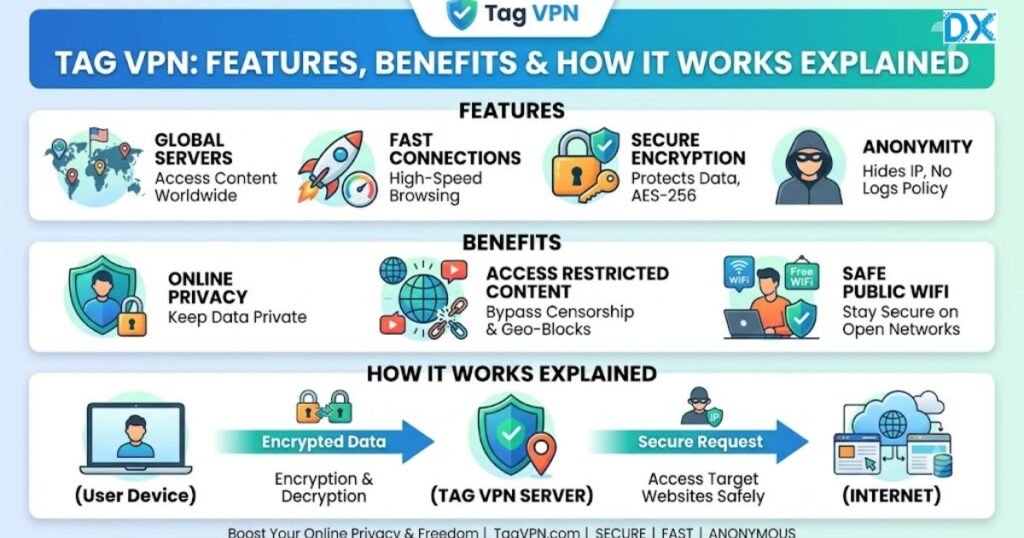
How Tag VPN Works
Understanding how tag vpn functions makes it easier to appreciate its value.
The process generally works like this:
- You install a VPN application.
- You connect to a VPN server.
- The VPN creates an encrypted tunnel.
- Your internet traffic travels securely through that tunnel.
- Websites only see the VPN server’s IP address instead of yours.
Simplified Workflow
Your Device
│
Encrypted Tunnel
│
VPN Server
│
Internet
This encryption protects your data from hackers, internet service providers (ISPs), and anyone attempting to intercept your online communications.
Key Features of Tag VPN
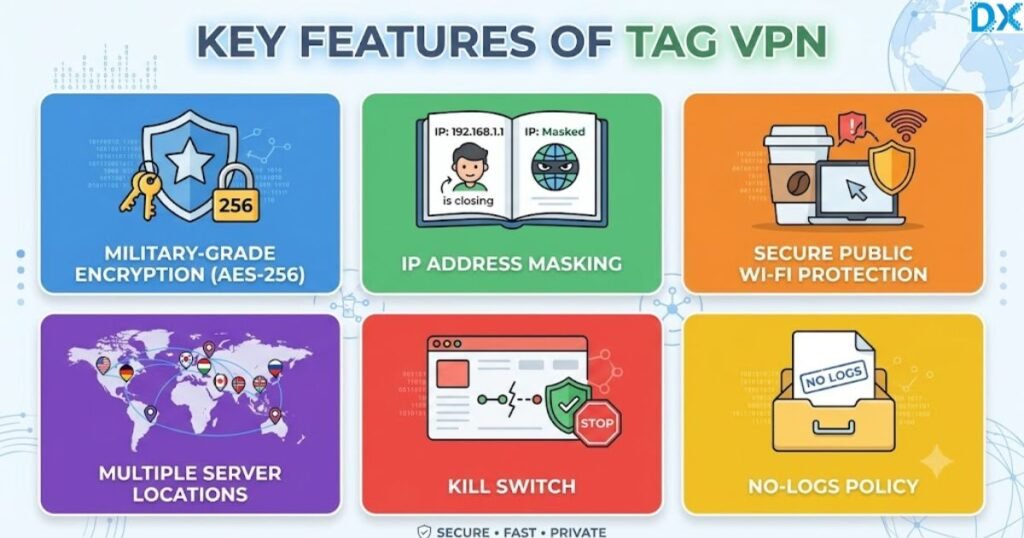
Different VPN providers offer various capabilities, but most quality VPN services include the following features.
1. Military-Grade Encryption
Modern VPNs typically use AES-256 encryption, considered one of the strongest encryption standards available.
Benefits include:
- Secure browsing
- Protected banking
- Safe online shopping
- Confidential communication
2. IP Address Masking
Instead of revealing your real IP address, the VPN assigns one from its server network.
Advantages include:
- Better online privacy
- Reduced tracking
- Improved anonymity
3. Secure Public Wi-Fi Protection
Public Wi-Fi is convenient but often insecure.
Using tag vpn helps protect against:
- Man-in-the-middle attacks
- Data interception
- Password theft
- Session hijacking
4. Multiple Server Locations
Many VPN providers maintain servers across dozens of countries.
This allows users to:
- Connect through different regions
- Improve connection flexibility
- Access services while traveling (subject to applicable laws and service terms)
5. Kill Switch
A kill switch automatically disconnects your internet connection if the VPN unexpectedly drops.
This prevents accidental exposure of:
- IP address
- Browsing activity
- Sensitive data
6. No-Logs Policy
Many reputable VPN providers state they do not store users’ browsing history or activity logs.
Before choosing a provider, always verify:
- Privacy policy
- Independent security audits
- Transparency reports
Benefits of Using Tag VPN
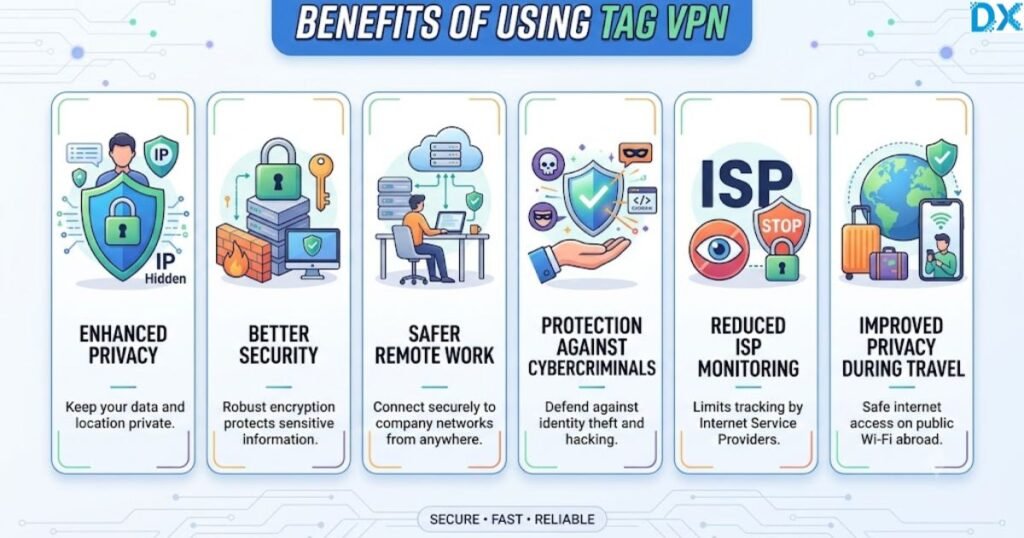
Using tag vpn provides several practical advantages for everyday internet users.
Enhanced Privacy
VPN encryption makes it significantly more difficult for third parties to monitor your browsing activities.
Better Security
VPNs protect sensitive information such as:
- Login credentials
- Financial transactions
- Emails
- Business documents
Safer Remote Work
Companies increasingly depend on VPN technology to secure employee access to corporate networks.
Benefits include:
- Secure file sharing
- Protected communications
- Reduced cybersecurity risks
Protection Against Cybercriminals
VPN encryption helps reduce exposure to threats like:
- Wi-Fi hackers
- Packet sniffing
- Network surveillance
Reduced ISP Monitoring
Although a VPN cannot make users completely anonymous online, it can reduce the amount of browsing information visible to internet service providers.
Improved Privacy During Travel
Travelers frequently use VPNs when connecting through:
- Hotels
- Airports
- Cafés
- Conference centers
Common Use Cases of Tag VPN
Different users rely on VPNs for different reasons.
| User Type | Primary Use |
| Remote workers | Secure company access |
| Students | Safe campus Wi-Fi |
| Travelers | Secure public internet |
| Businesses | Protect sensitive data |
| Gamers | More secure gaming sessions |
| Everyday users | Enhanced privacy |
Small Businesses
Businesses often use VPNs to:
- Connect remote offices
- Secure employee devices
- Protect confidential files
- Improve cybersecurity
Freelancers
Freelancers handling client information benefit from encrypted internet connections, especially when working from shared spaces.
Families
Households can use VPNs to improve security for multiple connected devices, including smartphones, laptops, tablets, and smart TVs.
Tag VPN vs Traditional Internet Connection
| Feature | Tag VPN | Standard Internet |
| Encryption | Yes | Usually No |
| IP Masking | Yes | No |
| Public Wi-Fi Protection | High | Low |
| Privacy | Better | Limited |
| Secure Remote Access | Yes | Limited |
| Data Protection | Strong | Basic |
A VPN adds an extra security layer that traditional internet connections typically do not provide.
How to Choose the Right Tag VPN
Not every VPN service offers the same level of performance or security.
Consider the following factors before subscribing.
Security Standards
Look for:
- AES-256 encryption
- Secure VPN protocols
- DNS leak protection
- Kill switch
Speed
A quality VPN should offer:
- Stable performance
- Low latency
- Fast downloads
- Reliable streaming
Server Network
Choose providers with:
- Large global server networks
- Multiple U.S. locations
- Reliable uptime
Privacy Policy
Review whether the provider:
- Maintains a no-logs policy
- Publishes transparency reports
- Undergoes independent audits
Device Compatibility
A good VPN supports:
- Windows
- macOS
- Android
- iPhone
- Linux
- Smart TVs
- Routers
Customer Support
Reliable providers typically offer:
- 24/7 live chat
- Email support
- Setup guides
- Troubleshooting resources
Best Practices for Safe VPN Usage
Using tag vpn effectively requires more than simply installing an app.
Keep Software Updated
Regular updates include:
- Security patches
- Bug fixes
- Performance improvements
Enable Automatic Connection
Configure your VPN to connect automatically whenever your device joins an unknown network.
Use Strong Passwords
Secure your VPN account with:
- Long passwords
- Password managers
- Multi-factor authentication
Verify Encryption
Occasionally check that:
- VPN is connected
- IP address is masked
- DNS requests are protected
Avoid Free VPNs Without Research
Some free VPN services may:
- Collect user data
- Display ads
- Offer limited encryption
- Restrict bandwidth
Always review a provider’s privacy practices before using any VPN service.
Limitations and Challenges of VPN Technology
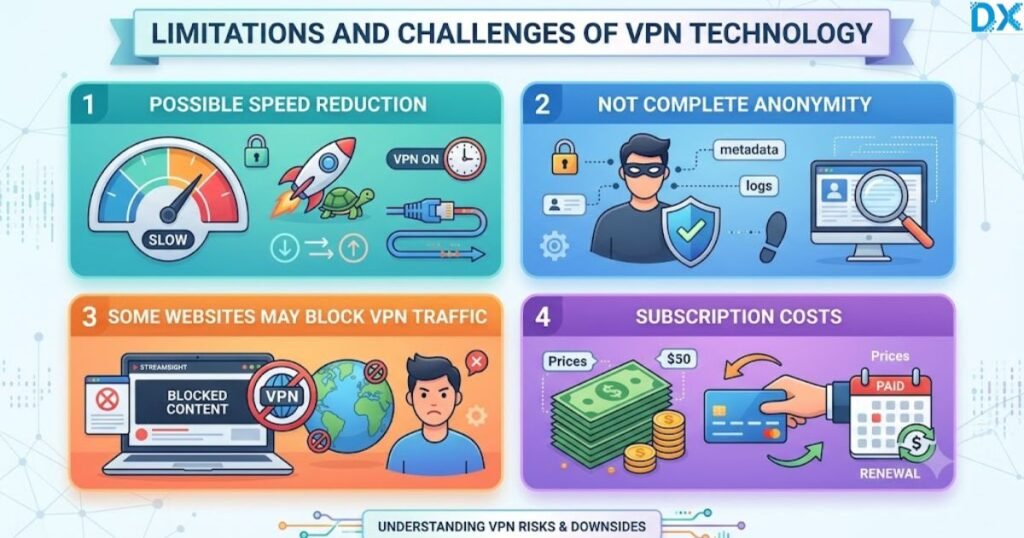
While VPNs provide valuable security benefits, they are not perfect.
Possible Speed Reduction
Encryption can slightly reduce internet speed, depending on:
- Server distance
- Network congestion
- Encryption protocol
Not Complete Anonymity
VPNs improve privacy but cannot make users completely anonymous online.
Other factors still matter, including:
- Browser tracking
- Cookies
- Account logins
- Device fingerprinting
Some Websites May Block VPN Traffic
Certain websites and online services restrict VPN connections for security or licensing reasons.
Subscription Costs
Premium VPN services generally require monthly or annual subscriptions, though they often provide stronger security, better performance, and customer support than free alternatives.
Expert Tips for Getting the Most from Tag VPN
- Connect to the nearest server for the best speeds.
- Enable the kill switch for continuous protection.
- Use multi-factor authentication whenever possible.
- Keep your operating system updated.
- Avoid clicking suspicious links, even when using a VPN.
- Combine VPN usage with antivirus software for layered security.
- Regularly review your VPN provider’s privacy policy.
Extra Suggestions About VPNs
For additional information about VPN security and internet privacy, consider these trusted resources:
These organizations provide educational materials on cybersecurity, encryption, networking, and digital privacy.
Conclusion
As online privacy concerns continue to grow, understanding tag vpn technology has become increasingly important for individuals and organizations alike. A VPN encrypts your internet connection, helps protect sensitive information, and adds an extra layer of security when using public networks or working remotely.
While no technology can guarantee complete anonymity, choosing a reputable VPN provider, following cybersecurity best practices, and staying informed about online threats can significantly improve your digital safety. Whether you’re browsing at home, traveling, or managing business data, tag vpn offers practical benefits that make secure internet usage more accessible and reliable.
FAQs
Q1. What is Tag VPN?
Tag VPN is a virtual private network solution that encrypts your internet connection, protects your online privacy, and helps secure your data while browsing, especially on public Wi-Fi networks.
Q2. Is Tag VPN safe to use?
Yes. A reputable tag vpn service that uses strong encryption, secure protocols, and a transparent privacy policy can significantly improve your online security and help protect sensitive information.
Q3. Does Tag VPN slow down internet speed?
Using tag vpn may slightly reduce internet speed because your data is encrypted and routed through a VPN server. High-quality VPN providers minimize this impact with optimized server networks.
Q4. Can Tag VPN protect public Wi-Fi connections?
Yes. Tag VPN encrypts your internet traffic, making it much harder for hackers to intercept your personal information while you’re connected to public Wi-Fi in places like airports, cafés, or hotels.
Q5. Should I use Tag VPN every day?
For many users, using tag vpn daily is a good practice, especially when handling sensitive information, working remotely, or frequently connecting to public wireless networks.